The Novels · Analysis
What Captain Alatriste Is — And Why It Works
Moral complexity, archaic prose, and a hero without good options: the themes and symbols that give Pérez-Reverte's debut novel its lasting power.
Captain Alatriste — published in Spanish as El Capitán Alatriste in 1996 — blends historical fiction, adventure, and moral drama into a novel set in seventeenth-century Spain ↗. Written by Arturo Pérez-Reverte in a deliberately archaic register that echoes the period's own literature, it pulls readers in from the first page and rarely lets go.
The series spans seven novels and weaves real historical figures alongside invented ones — grounding its adventure in genuine Golden Age politics, art, and social hierarchy without ever letting the history swallow the story.
A Hero Worth Following
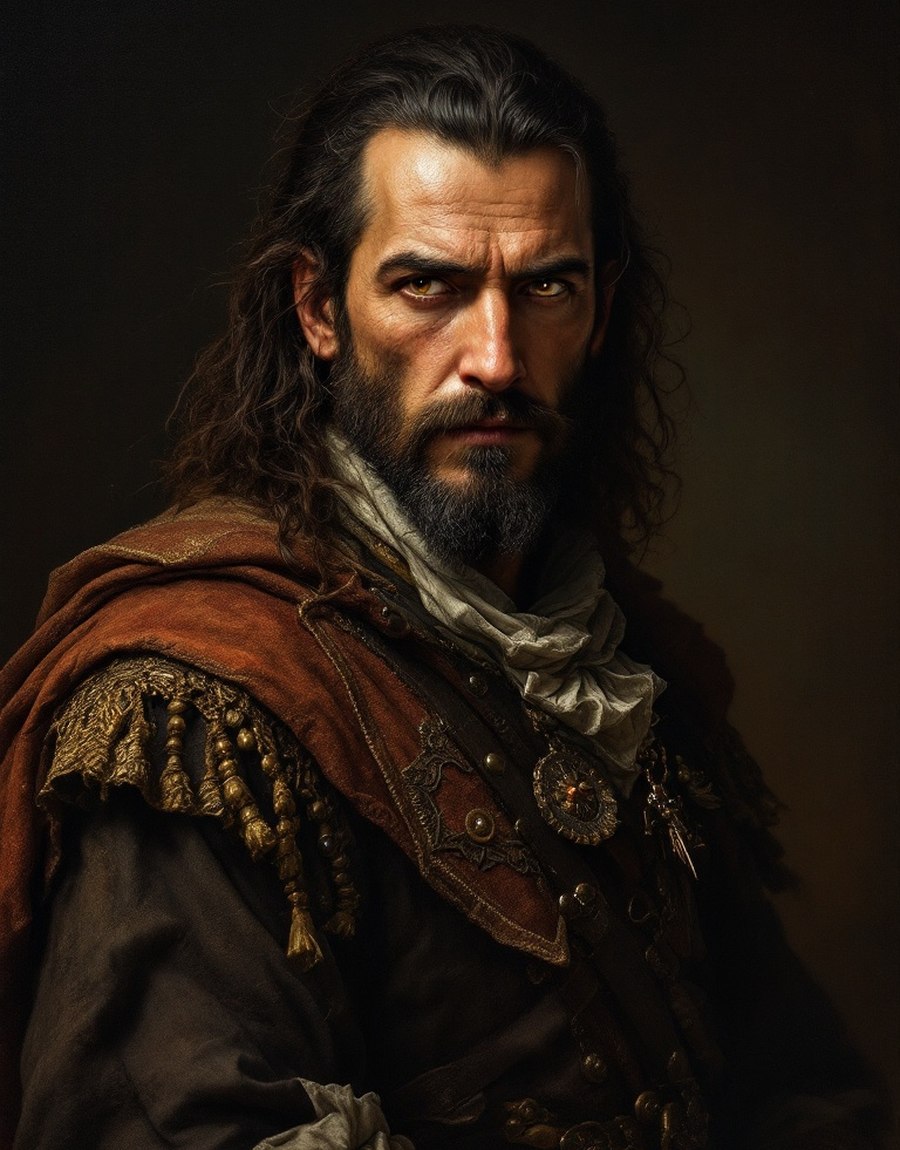
Captain Diego Alatriste y Tenorio is a veteran soldier of the Flanders wars who now earns his living as a sword for hire in the streets of Madrid.
Honorable in the face of adversity" is not a cliché here — it is the novel's central test, applied again and again to a man with very few good options.
The stakes escalate when Alatriste, working alongside the dangerous Gualterio Malatesta, is ordered to kill two foreign men — only to discover one is Charles Stuart, traveling incognito to Madrid ↗ to court the Spanish Infanta. Behind the conspiracy sits the weight of the Catholic Church ↗, court politics, and the rigid codes of a society that glorified an elite while ignoring everyone below it.
Why It Rewards Reading
Four qualities set the novel apart from conventional historical adventure.
A compelling hero : a reluctant hired blade who keeps to his own moral code. Rich historical texture : real Golden Age figures alongside invented ones. Propulsive plotting: a foreign prince, a marriage plot, a church conspiracy — the political intrigue keeps the pace relentless without reducing its characters to instruments of plot. And distinctive prose: the archaic Spanish register, carried well in translation, gives the novel a voice unlike modern thrillers.