The Novels · Review
The Cavalier in the Yellow Doublet
Pérez-Reverte's fifth Alatriste novel — royal jealousy, an Italian in black, and a swordsman navigating the glittering rot of Habsburg Madrid.
Arturo Pérez-Reverte's fifth Captain Alatriste novel, El Caballero del Jubón Amarillo — published in English as The Cavalier in the Yellow Doublet, translated by Margaret Jull Costa ↗ — arrives at a point in the series where both the characters and the world they inhabit have matured into something rich and fully realized. It deepens the moral complexity that has defined the saga from the start.
Captain Diego Alatriste y Tenorio ↗ — soldier, hired sword, reluctant survivor — is once again navigating a Madrid ↗ that glitters on the surface and rots underneath. His young ward Íñigo Balboa ↗, now capable with a blade, walks beside him. Together they balance their low social standing against the rigid codes of honor that govern their lives, threading a needle between courtly pomp and back-alley poverty.
The Plot: Desire, Danger & Royal Jealousy
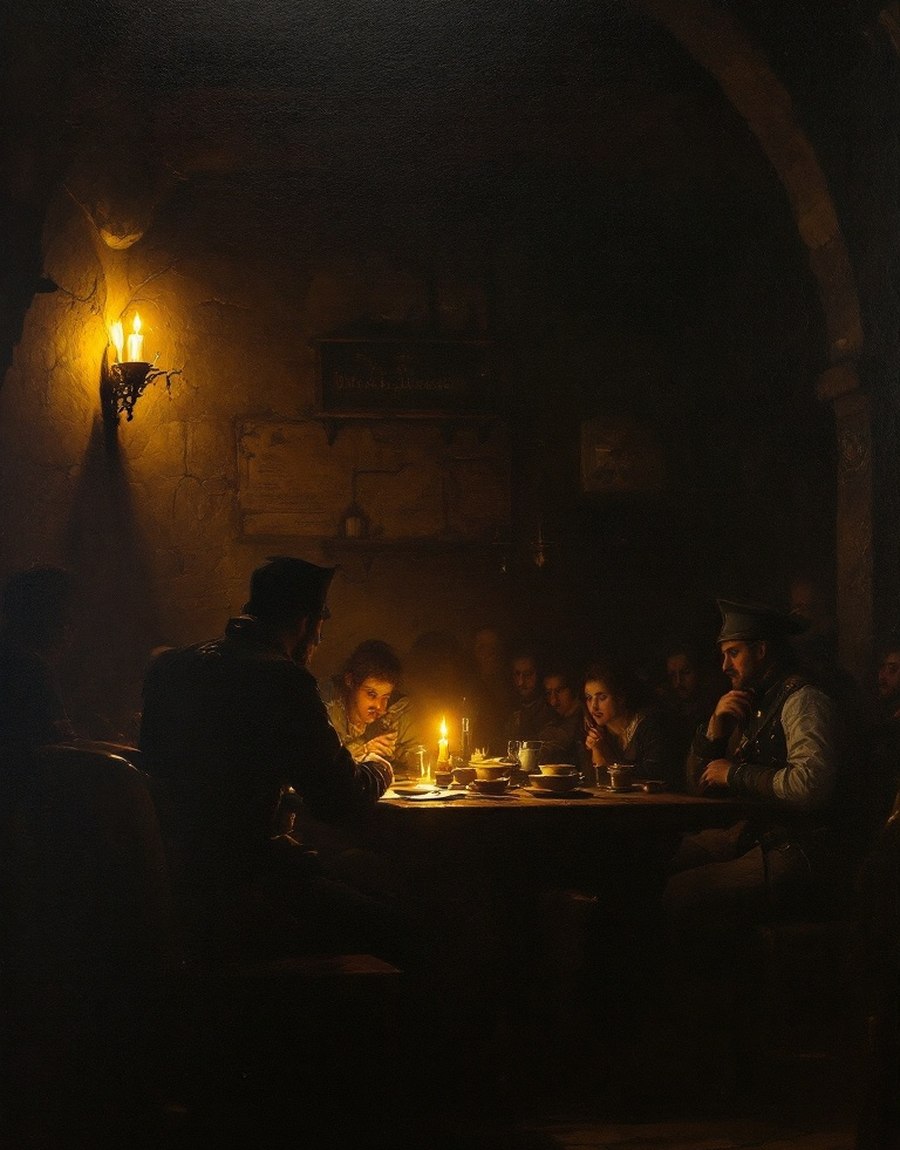
The novel's central complication is elegantly simple: Captain Alatriste begins an affair with María Castro, an actress whom King Philip IV also desires, and he refuses to give her up, whatever the cost.
This stubborn refusal to be directed by anyone but his own conscience is the defining trait that makes Alatriste simultaneously admirable and dangerous to be around. His intransigence turns him into a useful instrument for those who wish the king harm. Enemies — old and new — see in his compromised position the perfect mechanism for a plot against the crown.
His actions were dictated by him alone — which is precisely what made him so easy to use.
Into this tightening net steps Gualterio Malatesta ↗, the Italian mercenary who has served as one of the series' most effective antagonists. His reappearance carries genuine weight. Both men understand, without ceremony, that their long history demands a final reckoning. Meanwhile, Íñigo's infatuation with a lady of the court introduces a parallel thread — youthful, impulsive, nearly fatal. The two storylines converge in ways that feel both surprising and inevitable.
Setting & Themes: Elegy for a Fading Empire
Pérez-Reverte situates the novel inside the cultural and political reality of Spain ↗ with care.
Lope de Vega ↗ moves through the periphery of the action, lending authenticity to the cultural milieu in which María Castro operates and in which Alatriste moves as an armed anachronism. Poetry and swordplay share the same streets.
The flash-forward structure is deployed deliberately. Íñigo narrates from old age, and his occasional glimpses ahead — at Alatriste's fate, at Spain's coming decline — frame what could be simple adventure fiction as something closer to elegy. The reader is always aware that these moments of danger and beauty exist inside a larger story of loss. The novel works simultaneously as a gripping historical thriller and as a meditation on a culture living past its best days without knowing it yet.
Characters: Depth Over Archetype
Alatriste resists easy classification.
Íñigo Balboa ↗ functions as both narrator and conscience. His first-person retrospective voice allows Pérez-Reverte to deploy dramatic irony with precision — the reader, like old Íñigo, knows more than young Íñigo does. This gap between what is felt in the moment and what will be understood in hindsight gives the novel its emotional texture.
Malatesta ↗ is one of the more compelling antagonists in popular historical fiction — dangerous not because he is cartoonishly evil, but because his code of conduct is a dark mirror of Alatriste's own. Their mutual respect and mutual enmity give their confrontations a weight that purely adversarial relationships rarely achieve.
Verdict
The Cavalier in the Yellow Doublet is a confident, accomplished entry in a series that continues to deliver.
- Strong, psychologically credible central characters
- Vivid and accurate rendering of Golden Age Madrid
- Malatesta's return raises the dramatic stakes meaningfully
- Retrospective narration adds emotional depth without slowing the pace
- Pérez-Reverte's prose, in Margaret Jull Costa ↗'s translation, remains precise and atmospheric