The Novels · Review
El Sol de Breda: The Sun Over Breda
The third Alatriste novel trades Madrid's back alleys for the killing fields of Flanders — a dark meditation on honor, loyalty, and the cost of a drawn blade.
El Sol de Breda — published in English as The Sun Over Breda — is the third novel in Arturo Pérez-Reverte ↗'s Captain Alatriste series. Narrator Íñigo Balboa ↗, now fifteen, is torn from the intrigues of Madrid ↗ and deposited in the grinding misery of the Siege of Breda ↗. The shift in terrain is also a shift in register: there is no humor here, only endurance.
Back to the Battlefield
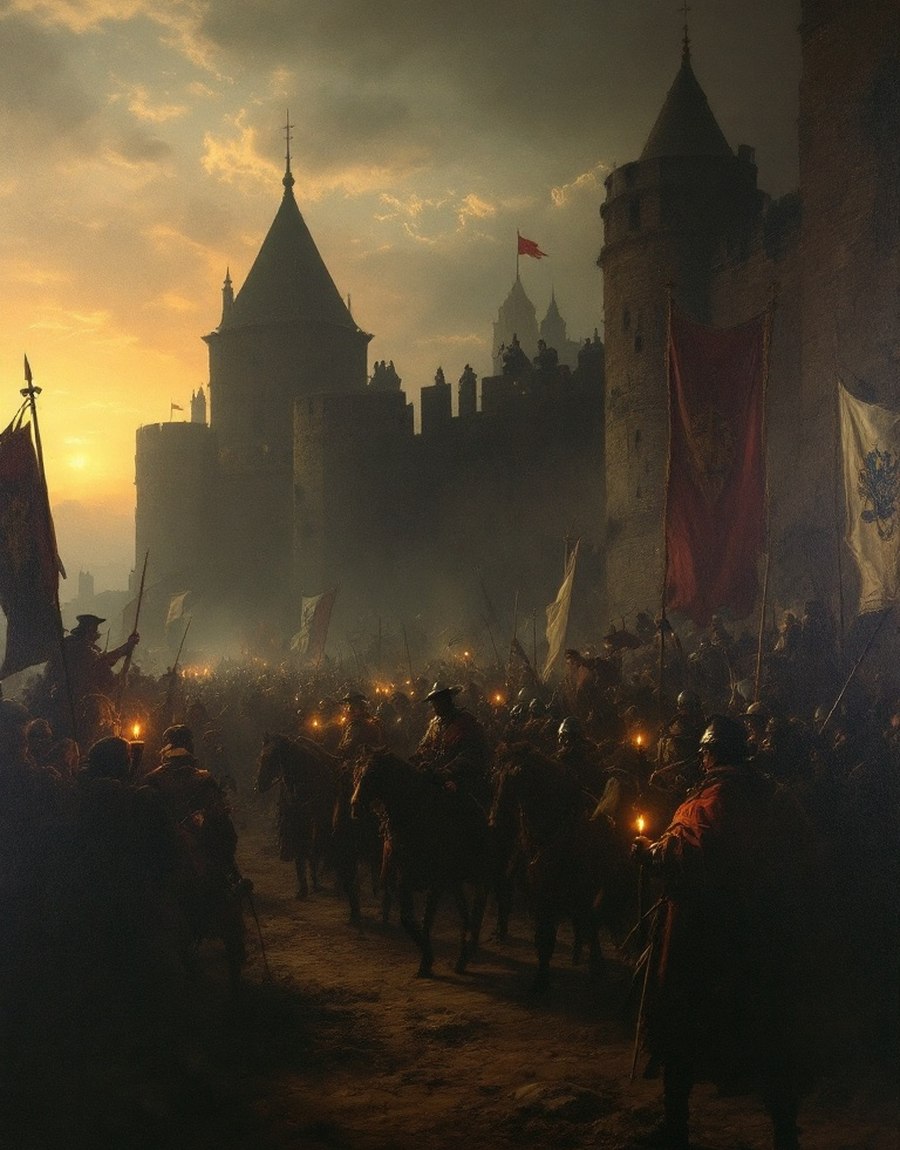
Abandoning his mercenary life in Madrid, Captain Alatriste ↗ returns to the army, leading men under the Spanish Crown ↗ against the Dutch. The campaign is grinding and demoralizing: the king has left his soldiers unpaid, their loyalty stretched to its limit. Alatriste is caught between honoring his covenant to a crown he struggles to admire and yielding to the righteous fury of the men beside him.
Back in Spain ↗, the villain Luis de Alquézar ↗ grows bolder, and the enigmatic Angélica de Alquézar ↗ — a figure Íñigo both desires and fears — keeps the narrator uneasily informed. The poet Francisco de Quevedo ↗, a friend of Alatriste, bridges both worlds through letters sent from Madrid to the front.
To achieve honor, there comes a moment when the only alternative is the sword — and once declared a hero, you remain one forever.
Style & Verdict
The novel draws comparisons to the swashbuckling fiction of Rafael Sabatini ↗ and Alexandre Dumas ↗, but Pérez-Reverte's approach is more austere. Battle scenes are rendered through Íñigo's close-range perspective — intimate, violent, and deliberately unheroic. Golden Age poetry and drama are woven throughout, grounding the adventure firmly in 17th-century Spanish culture.
Unlike its predecessors, El Sol de Breda carries no relief. Its tone is a consistent, quiet darkness — a novel that concludes, without fanfare, that sometimes the only escape from dishonor is a drawn blade. It cements Diego Alatriste y Tenorio ↗ as one of historical fiction's most compelling soldier-figures.