The Film · Analysis
Honour, Decline, and the Weight of a Promise: Themes in Alatriste (2006)
Agustín Díaz Yanes's film distils the novels' deepest preoccupations — loyalty, imperial decay, and the cost of an old soldier's word — into one sweeping arc.
At its core, Alatriste is a film about what a man owes the dead. When Lope Balboa falls on a foreign battlefield, his dying request — watch over my son — becomes the structural spine of everything that follows. Captain Diego Alatriste is not a sentimental man, yet he honours that bargain without complaint or ceremony, and it shapes every subsequent choice he makes.
Viggo Mortensen, playing Alatriste with characteristic economy, projects a soldier who has outlived the empire he serves. The guardian-ward relationship with young Íñigo Balboa gives the film its emotional continuity across decades of compressed Spanish history.
Alatriste does not choose loyalty as a virtue — he practices it as a reflex, long after it has ceased to be rewarded.
An Empire as Antagonist
The film's second great theme is decline.
The contract to eliminate two English visitors — one of the film's early turning points — is emblematic of this theme. What appears to be a clean professional task unravels into something far larger and more dangerous, implicating Gualterio Malatesta and Alatriste in consequences neither man fully controls. The Spanish imperial machine uses men, then discards them.
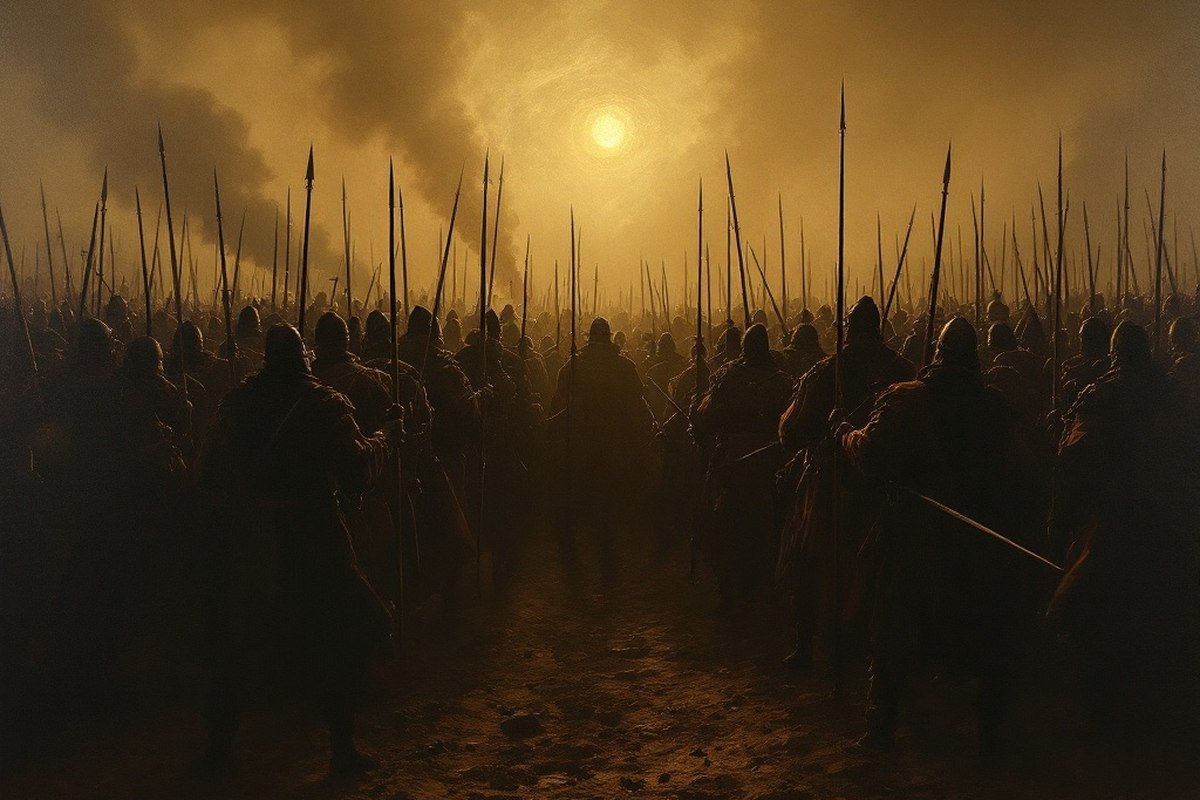
Rocroi: Where the Story Ends
The Battle of Rocroi in 1643 gives the film its final reckoning.
The choice is thematically precise. Alatriste's death is not tragedy in any individual sense — it is convergence. A man and an age end together, and neither survives the other.